
Understanding Rotation in Golf
In the world of golf, how we think about our body movements can significantly impact our swing. Many golfers tend to conceptualize rotation as merely turning their body. However, as a seasoned instructor, I emphasize the importance of perceiving rotation as twisting. This subtle yet crucial distinction can lead to a more efficient swing and better overall performance.
The Spiral Fascial Line
The concept of the spiral fascial line is pivotal in understanding how our bodies create effective rotation. This line runs from your foot, up through your core, and spirals across to the opposite side of your body. By acknowledging this anatomical feature, you can leverage it to enhance your swing mechanics.
Why Twisting Matters
When golfers think of rotation as turning, it often leads to poor mechanics. For instance, turning can result in your head moving away from the ball, which may cause you to lift your arms to compensate, leading to a host of swing faults. Instead, by focusing on twisting, you can maintain a centered head position throughout your swing, which is essential for consistency and accuracy.
Visualizing the Twist
A practical way to visualize this twisting motion is through a drill I’ve often referenced: the right shoulder blade glide drill. In this drill, imagine holding an elastic band against your right shoulder. This setup serves as a fantastic visual aid for understanding the spiral fascial line.
To engage this line effectively, envision stretching the band as much as possible. You would initiate this by moving your right shoulder (your trail shoulder) up and back. This motion not only helps in loading your core but also stretches the fascial line, which is critical for generating power in your swing.
Implementing the Twisting Technique
As you practice this twisting motion, focus on keeping your head centered. This will require conscious effort, especially if you are accustomed to the turning motion. Experiment with the feeling of your right shoulder gliding back while maintaining a stable head position. This technique aligns with the principles outlined in the elite model of golf mechanics, promoting a more powerful and efficient swing.
By integrating the twisting concept into your practice, you'll find that it enhances your ability to create rotation without the common pitfalls associated with turning.
Key Takeaways
- Think of rotation in your golf swing as twisting rather than turning to maintain a centered head position.
- The spiral fascial line is essential for creating efficient rotation and power in your swing.
- Utilize visualization techniques, like the right shoulder blade glide drill, to reinforce the twisting motion.
- Keeping your head centered throughout the swing can prevent common errors associated with turning.
- Incorporate these concepts into your practice to experience significant improvements in your golf swing.
See What GOATY Finds in Your Swing
Upload a swing video and get your GOATScore, root cause diagnosis, and personalized drill prescription in 60 seconds.
Analyze My Swing Freeor
Try a Free Live LessonRelated Articles

Skyrocket Your Golf Scores with GOAT Model Techniques
Learn how to improve your golf swing and skyrocket your scores using GOAT techniques in just days!
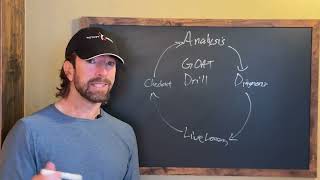
Master Your Golf Swing with the GOAT Drill Feedback Loop
Discover the GOAT Drill's infinite feedback loop to enhance your golf swing efficiently and effectively.

Improve Your Golf Swing with AI Coaching Insights
Discover how AI golf lessons can enhance your swing by focusing on stability and rotational loading.