
Understanding Leadside vs Trailside Patterns
In the world of golf instruction, grasping the nuances of swing patterns is crucial for improvement. One of the most significant distinctions in golf swings is between the leadside and trailside patterns. In this article, we will explore these two approaches, using Jack Nicklaus and the GOAT Model as prime examples to illustrate the differences and help you refine your technique.
The Leadside Pattern Explained
The leadside pattern emphasizes the use of the left side of the body during a swing. This technique requires the golfer to engage their body aggressively, particularly the left arm, to create momentum and generate speed. A key characteristic of the leadside pattern is that the right arm remains soft and bent, which can be seen in Jack Nicklaus's swing. His right arm does not fully extend behind his body, indicating a reliance on the left side for power generation. This approach allows for a more controlled swing, but can sometimes result in less overall rotation through the shot.
Visualizing the Differences
When comparing swings, one of the most noticeable differences can be observed in the arm positions and grip pressure. In Jack's leadside pattern, his right thumb and forefinger are soft on the club, allowing for a more relaxed grip. This softness contrasts with the firmer grip seen in the trailside pattern, where the right hand actively drives the club into the ball using the body’s rotation. In this scenario, the left hand is less involved, primarily helping with parametric acceleration rather than generating power.
The Trailsider Pattern
In contrast, the trailside pattern, exemplified by the GOAT Model, showcases a more aggressive use of the right side. In this pattern, the golfer drives from the right side, pushing hard off the right big toe, which contributes to a more significant rotation through the swing. This method creates a different look, with the right arm fully extended and engaged in the action of hitting the ball. The trailside pattern allows for greater overall rotation, resulting in a more dynamic and powerful swing.
Pressure Distribution and Stability
Pressure distribution in the feet is another essential aspect when distinguishing these two patterns. In Jack's leadside swing, his weight is firmly planted on the left side, indicating a shift that allows him to utilize his body effectively. On the other hand, the GOAT Model maintains pressure on the right side, which aids in the explosive nature of the trailside swing. This difference in weight distribution plays a pivotal role in how each golfer generates power and maintains balance throughout their swing.
Conclusion: Which Pattern is Right for You?
Understanding these patterns is crucial for golfers looking to improve their swing mechanics. By analyzing the differences between leadside and trailside swings, you can identify which pattern resonates more with your natural movement and playing style. The insights gained from examining elite models like Jack Nicklaus and the GOAT Model can help you refine your technique and achieve better results on the course.
Key Takeaways
- The leadside pattern focuses on engaging the left side of the body, resulting in a softer right arm and less overall rotation.
- The trailside pattern emphasizes using the right side aggressively, providing a firmer grip and greater rotation through the swing.
- Pressure distribution in the feet plays a critical role in how each pattern generates power and maintains balance.
- Analyzing elite models can help you determine which swing pattern may suit your playing style best.
See What GOATY Finds in Your Swing
Upload a swing video and get your GOATScore, root cause diagnosis, and personalized drill prescription in 60 seconds.
Analyze My Swing Freeor
Try a Free Live LessonRelated Articles
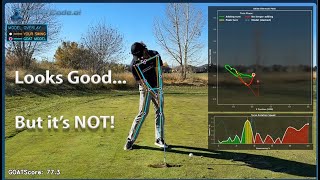
Understanding Golf Swing Analysis: Why Your Eyes Lie
Discover why relying on your eyes for golf swing analysis can mislead you. Learn how AI can provide accurate insights in
Learn to Swing Like the GOAT Model for Perfect Golf Technique
Discover how to analyze your swing using the GOAT Model and improve your golf game with real-time feedback.
Unlock Your Swing with AI Golf Coaching from GOATCode.ai
Experience real-time analysis and coaching to enhance your golf swing using AI technology from GOATCode.ai.