
Understanding the GOAT Theory in Golf
The golf swing is a complex motion that requires a blend of biomechanics and power generation. In this article, we will explore the GOAT Theory, which emphasizes how understanding the source of power and proper body mechanics can lead to a more effective golf swing. By analyzing the changes in my swing and comparing them to the elite model, we can identify key elements that contribute to a powerful and efficient swing.
The Takeaway: Starting Strong
The takeaway is one of the most significant parts of the golf swing, and it's where many golfers struggle. In my recent journey of applying the GOAT Theory, I discovered the importance of staying connected during the takeaway. This means that my arms should remain connected to my rib cage as I start the club back. This connection helps to maintain the correct arm angle, which is essential for setting up a powerful swing.
The Importance of Connection
Staying connected not only aids in achieving the correct positions but also allows for a more natural flow in the swing. Many golfers make the mistake of lifting their arms too high during the takeaway, which can lead to disconnection and a lack of power. Instead, the focus should be on a smooth, controlled movement that keeps the arms close to the body.
Mastering the Backswing: Hips Go Deep
As we progress to the top of the swing, one crucial element is the movement of the hips. It's essential for the hips to move deep in the backswing rather than laterally. Most golfers, when analyzed on video, show a tendency for their hips to shift towards the ball. This is often a result of trying to create power by lifting the arms, which can lead to an ineffective, hacking motion.
Drawing the Tush Line
To visualize the correct hip movement, draw a line on the hip at the start of the swing. As you proceed into the backswing, your right hip should move deeper, and your shoulders should remain steady. This technique creates a powerful position where your arms have ample room to come down effectively. If your hips are moving towards the ball during the backswing, it indicates a fundamental flaw in your technique.
The Transition and Downswing
Entering the transition from the backswing to the downswing is another area where many golfers falter. At this point, both my hips and the elite model’s hips should be positioned further back than where they started. This positioning is critical for generating power and maintaining the correct swing path. A common error is thrusting the hips forward towards the ball, which can severely compromise the swing's efficiency.
Engaging the Core
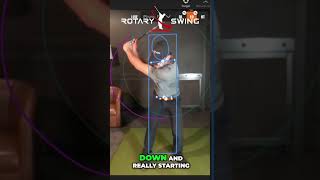
During the downswing, engaging the core muscles is vital. This engagement naturally causes the head to drop slightly, a movement often criticized but actually indicative of proper muscle use. When you activate your core, the muscles shorten, which pulls your head down. This dynamic movement is essential for maintaining balance and generating power through the swing.
Impact: Staying Behind the Line
As we approach impact, it’s crucial to ensure that your hips remain behind the initial line drawn at the start of the swing. If they do not, it suggests a misunderstanding of how to produce power effectively. Utilizing the large muscles in your core, trunk, legs, hips, glutes, and hamstrings will help maintain that important position.
Conclusion: Continuous Improvement
In conclusion, my journey of aligning my swing with the GOAT Model is ongoing. The changes I’m making are taking time to integrate, but the understanding of how power works in the golf swing is making these positions feel more natural. By focusing on the connection during the takeaway, the depth of hip movement, and the engagement of the core, you can start to see significant improvements in your own swing.
Key Takeaways
- Stay connected during the takeaway to maintain the correct arm angle.
- Ensure hips move deep in the backswing to create a powerful position.
- Engage your core to enhance power generation and maintain balance.
- Keep your hips behind the line at impact for optimal swing mechanics.
- Understand that changes take time, but with practice, they will become natural.
See What GOATY Finds in Your Swing
Upload a swing video and get your GOATScore, root cause diagnosis, and personalized drill prescription in 60 seconds.
Analyze My Swing Freeor
Try a Free Live LessonRelated Articles

Unlocking Power in Your Golf Swing with Side Bend
Discover how side bend enhances your golf swing power and control. Learn effective techniques for optimal performance on

Why Engaging Your Core Is Key for Golf Success
Learn the importance of core engagement in your golf swing for improved performance and stability.
Understanding Lateral Hip Movement in Golf Swings
Discover how lateral hip movement enhances your golf swing, improving power and consistency. Unlock your potential with