
Understanding the Lead Shoulder Movement
The golf swing is a complex movement that relies heavily on proper body mechanics. One of the key components of a successful swing is the movement of the lead shoulder. In this article, we will explore how to move your lead shoulder effectively, using insights drawn from elite models of the swing.
Identifying Common Issues
Many golfers struggle with their lead knee positioning during the swing. A common mistake is allowing the lead knee to stay too far out, which can hinder the proper loading of the trail side. This often results in a breakdown of the swing mechanics.
For instance, we can look at a student's swing compared to a model. The student’s left knee is notably out of alignment when compared to the elite model's knee position. The elite model allows the knee to come in, facilitating better weight transfer and load into the trail side. This discrepancy is a frequent issue among mid to high-handicap golfers.
Importance of Hip and Shoulder Alignment
Another critical aspect to consider is hip movement. In the student’s swing, the right hip socket moves back toward the target too early. This early movement causes the golfer to recenter prematurely, disrupting the natural flow of the swing. By contrast, elite ball strikers maintain their hip position longer, allowing for a more powerful and stable transition into the ball.
The lead hip should ideally remain behind the ball longer, which helps prevent early extension and encourages proper weight distribution. When the lead hip moves forward too soon, it can cause the golfer to lose posture and power.
Leveraging Pressure Over Mass
In your swing, think about pressure, not mass. The lead foot should push back away from the target, which prevents lateral sliding. This action is vital for maintaining stability and allows for a more effective rotation. When the lead foot is correctly engaged, it creates the necessary resistance to support a powerful swing.
Shoulder Positioning and Power Generation
There’s also a significant difference in lead shoulder positioning between the elite model and the average golfer. The gap between the model's lead shoulder and the student's lead shoulder can indicate issues with posture and lag. If the lead shoulder rises too early, it can cause the golfer to lose power and control.
To combat this, focus on keeping the trail hip loaded longer and supinating the trail hand instead of casting the club. Supination will help maintain the proper shoulder position and keep the lead shoulder down for longer during the swing.
Utilizing Live Skeleton Traces
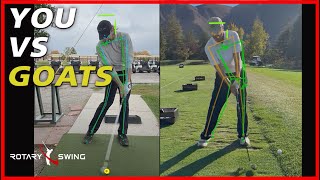
With the introduction of live skeleton tracing technology, golfers can now correct their movements in real time. This tool allows you to compare your swing with elite models, helping to identify discrepancies in your shoulder movement and overall posture.
For example, a live trace can show how the sternum moves. In many cases, you might notice that the sternum dips down at the beginning of the swing, which is the opposite of what the elite model demonstrates. This can be attributed to moving onto the lead side too early, which leads to standing up during the swing and a lack of ground load.
Conclusion
By focusing on the movement of your lead shoulder and the associated mechanics, you can significantly improve your golf swing. Remember to pay attention to your knee and hip movements, and leverage the power of technology to help you refine your technique.
Key Takeaways
- Maintain proper lead knee alignment to enhance weight transfer.
- Keep the trail hip loaded longer to prevent early extension.
- Focus on pressure from the lead foot to stabilize your swing.
- Use live skeleton traces for real-time feedback and corrections.
- Work on lead shoulder positioning to retain power and posture.
See What GOATY Finds in Your Swing
Upload a swing video and get your GOATScore, root cause diagnosis, and personalized drill prescription in 60 seconds.
Analyze My Swing Freeor
Try a Free Live LessonRelated Articles

Step-by-Step Guide to Building a GOAT Golf Swing
Learn how to build a GOAT golf swing step by step with insights from elite patterns and biomechanics.
Compare Your Golf Swing to the GOAT Model
Discover how your golf swing measures up against the elite model and learn key adjustments for improvement.
Fixing the Trail Arm Lift in Your Golf Swing
Learn how to eliminate the trail arm lift in your golf swing with effective drills and techniques to enhance your perfor