
Introduction to the GOAT Model Swing
In the world of golf, the year 2000 is often celebrated as a pinnacle of performance, largely due to the dominance of the GOAT Model during that season. His swing mechanics were not only effective but surprisingly simple, embodying the essence of minimal movement while maximizing power. This article delves into the core principles of that swing and how you can implement these ideas into your own game.
The Simplicity of the GOAT Model
When analyzing the GOAT Model's swing, especially during the 2000 season, it becomes clear that less truly can be more. His swing exhibited minimal movement in the hands and arms, demonstrating a focus on core mechanics rather than flashy techniques.
Quiet Hands and Arms
One of the pivotal aspects of the GOAT Model's swing was the quietness of his hands and arms during the takeaway. As he shifted his weight to the right, there was little wrist action involved. This allowed for a more stable and powerful foundation as he prepared for the downswing.
Lateral Movement
As he transitioned into the downswing, the GOAT Model made a significant lateral move back to the left. This movement created a widening angle between the club shaft and his arms, which is a departure from what many players are taught today. Instead of maintaining wrist angles through impact, he actively released this angle early in the swing, allowing for a wider arc both back and through.
Power from Simplicity
Another striking feature of the GOAT Model's swing was his ability to generate power with seemingly minimal effort. Observing clips from his 2000 season, one might notice that even on half swings, he could still achieve impressive distances. This phenomenon can be attributed to the early acceleration of the club, which is crucial for hitting powerful shots.
The Role of Wrist Set
Unlike many contemporary players who emphasize an early wrist set, the GOAT Model demonstrated a very late wrist set. This approach allowed him to maintain a wide, flat left wrist throughout the swing, enabling a more effective transfer of energy through the ball.
Throwing the Club from the Top
A key concept in understanding the GOAT Model's approach is the idea of 'throwing' the club from the top of the swing. While it may sound counterintuitive, especially given the common advice to maintain lag, this technique is about accelerating the club early. By doing so, he created a more dynamic and powerful motion.
Lower Body Dynamics
As you implement these concepts, it's essential to recognize the role of your lower body. To achieve the GOAT Model's effect, your lower body should work in a way that supports the upper body’s acceleration. This may initially feel strange, as it involves slowing down your lower body movement while allowing the upper body to lead with speed.
Contrarian Perspectives on the Golf Swing
The lessons derived from the GOAT Model's 2000 swing challenge many traditional notions of golf instruction. The emphasis on simplicity, early acceleration, and a different approach to wrist angles are all aspects that can redefine how golfers view their swings.
Embrace New Ideas
As you explore these principles, remember that they are part of a broader understanding of golf mechanics that might differ from mainstream teachings. Jack Nicklaus famously said he felt he could never release the club early enough as long as he was moving left. This insight aligns closely with the GOAT Model's philosophy and can serve as a guiding principle in your own practice.
Key Takeaways
- The GOAT Model's swing emphasizes simplicity with minimal movement for maximum power.
- Quiet hands and arms during the takeaway lead to a more stable swing.
- Early acceleration of the club is crucial for generating distance, even on half swings.
- Understanding the dynamics of wrist set and lower body movement can enhance your swing.
- Challenge traditional notions of the golf swing to discover a more effective approach.
See What GOATY Finds in Your Swing
Upload a swing video and get your GOATScore, root cause diagnosis, and personalized drill prescription in 60 seconds.
Analyze My Swing Freeor
Try a Free Live LessonRelated Articles
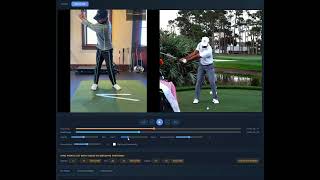
Step-by-Step Guide to Building a GOAT Golf Swing
Learn how to build a GOAT golf swing step by step with insights from elite patterns and biomechanics.
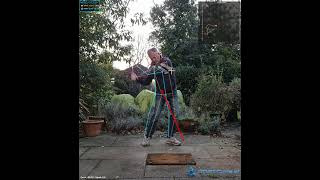
Mastering Lead Shoulder Movement in Your Golf Swing
Learn how the lead shoulder moves in the golf swing using the GOAT Model. Improve your technique and performance with ex
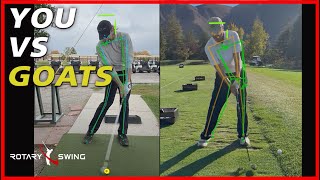
Compare Your Golf Swing to the GOAT Model
Discover how your golf swing measures up against the elite model and learn key adjustments for improvement.